Air Condition Installation Services
The Benefits of Air Conditioning in Homes and Other Properties.
Introduction
Air conditioning has become an important part of modern living, providing comfort in homes, offices, shops, hotels, hospitals, and other commercial buildings. In warm climates such as Ghana, where temperatures can be high throughout the year, an efficient air conditioning system can make indoor spaces more comfortable, improve working conditions, and help people sleep better.
However, choosing an air conditioner involves more than simply selecting a unit that produces cold air. The best system should deliver effective cooling, consume as little electricity as reasonably possible, improve indoor comfort, and provide reliable service over many years.
Modern air conditioners use advanced technologies, including inverter compressors, intelligent temperature controls, energy-saving operating modes, and improved heat exchangers, to deliver cooling more efficiently.
This article explores the major benefits of air conditioning in homes and offices, examines the different types of air conditioners, and explains how each type works to conserve electricity while maintaining excellent cooling performance.
The Major Benefits of Air Conditioning in Homes and Offices
1.1. Provides a Comfortable Indoor Environment
One of the main benefits of air conditioning is its ability to maintain a comfortable indoor temperature.
Excessive heat can make it difficult to relax, sleep, concentrate, or perform daily activities. An appropriately sized air conditioner helps regulate indoor temperatures, making homes and workplaces more pleasant.
In offices, a comfortable environment can help employees concentrate on their tasks without being distracted by excessive heat.
In homes, air conditioning can make bedrooms, living rooms, and other frequently used spaces more comfortable, especially during hot afternoons and humid nights.
1.2. Improves Productivity in Offices
High indoor temperatures can contribute to discomfort, fatigue, and difficulty concentrating.
Air conditioning helps create a more comfortable working environment, allowing employees to focus on their responsibilities.
Businesses such as banks, hotels, restaurants, retail shops, and professional offices can also benefit from maintaining a pleasant indoor atmosphere for customers and visitors.
Business benefit: An efficient air conditioning system can contribute to a more comfortable workplace and a better customer experience.
1.3. Helps Improve Sleep Quality
A room that is excessively hot or humid can make it difficult to fall asleep and remain asleep.
Air conditioning helps maintain a comfortable sleeping temperature and can reduce excessive indoor humidity when operating under suitable conditions.
For better results, Yehans International Gh. Ltd. guides homeowners to select a quiet, energy-efficient unit and use a moderate temperature setting rather than making the room unnecessarily cold.
Using a timer or sleep mode can also help reduce electricity consumption overnight.
1.4. Helps Control Indoor Humidity
Humidity is an important consideration in tropical environments.
When an air conditioner cools warm indoor air, moisture can condense on the cold evaporator coil and drain away. This process can help reduce indoor humidity.
Controlling excessive humidity can make a room feel more comfortable and help reduce conditions that encourage mold growth.
However, air conditioning is not a complete solution to dampness. Roof leaks, plumbing problems, water penetration, and poor ventilation should also be addressed.
1.5. Helps Improve Indoor Air Quality
Many air conditioners contain filters that capture some airborne particles, such as dust and lint, as air passes through the system.
At Yehans International Gh. Ltd., we install a model filtration air conditioner that helps reduce certain particles circulating indoors.
For the best results:
- Clean or replace filters according to the manufacturer's instructions.
- Keep indoor and outdoor units free from excessive dust and obstructions.
- Arrange professional maintenance with Yehans International Gh. Ltd. when necessary.
- Provide adequate ventilation with suitable outdoor air where required.
Important: A standard air conditioner does not automatically remove all smoke, gases, viruses, or other pollutants. Yehans International provides an air conditioner with good filtration capabilities that brings happiness to your home.
1.6. Protects Equipment and Supports a Better Working Environment
In certain offices and commercial environments, excessive heat can affect the operation and reliability of electronic equipment.
Air conditioning can help maintain suitable temperatures for computers, networking equipment, and other heat-sensitive devices, provided the system is properly designed for the space and equipment load.
This can be particularly useful in server rooms, computer laboratories, control rooms, and business facilities.
Specialist equipment rooms may require dedicated cooling systems that can operate continuously and provide appropriate humidity control.
1.7. Improves Comfort for Customers and Visitors
For businesses that receive customers, air conditioning can make indoor spaces more welcoming.
A comfortable temperature can improve the experience of people visiting:
- Hotels and guesthouses.
- Restaurants and cafés.
- Hospitals and clinics.
- Shopping centers.
- Conference rooms.
- Offices and reception areas.
An energy-efficient system helps businesses provide this comfort while managing operating expenses.
Different Types of Air Conditioners and How They Work
Air conditioners are available in different designs to meet the cooling requirements of individual rooms, large homes, offices, hotels, and commercial buildings.
The following illustrated guide shows six common types of air conditioning systems and explains their uses and energy-saving features.
2.1. Wall-Mounted Split Air Conditioner

The wall-mounted split air conditioner is one of the most common choices for homes and small offices.
It consists of two main components:
- Indoor unit: Installed inside the room to circulate and cool the air.
- Outdoor unit: Installed outside the building to release the heat removed from the room.
The two units are connected by refrigerant pipes and electrical connections.
How it works
The indoor unit draws warm air from the room and passes it over a cold evaporator coil. Refrigerant circulating through the coil absorbs heat from the air.
The cooled air is then blown back into the room, while the refrigerant carries the absorbed heat to the outdoor unit. The outdoor unit releases that heat into the outside environment.
This process continues until the room approaches the temperature selected on the thermostat.
How it conserves electricity
An inverter split air conditioner adjusts the compressor's operating speed according to the cooling demand. Once the room approaches the desired temperature, the compressor can slow down rather than repeatedly switching between full power and complete shutdown.
This can reduce electricity consumption, particularly during extended operation under suitable conditions.
Other energy-saving features may include:
- Eco mode.
- Programmable timers.
- Sleep mode.
- Temperature sensors.
- Variable-speed indoor fans.
Best for: Bedrooms, living rooms, small offices, shops, and individual workspaces.
Recommendation: For most homes in Ghana, an appropriately sized inverter split air conditioner is a practical option to consider because it combines individual room control with potentially lower electricity consumption.
2.2. Window Air Conditioner
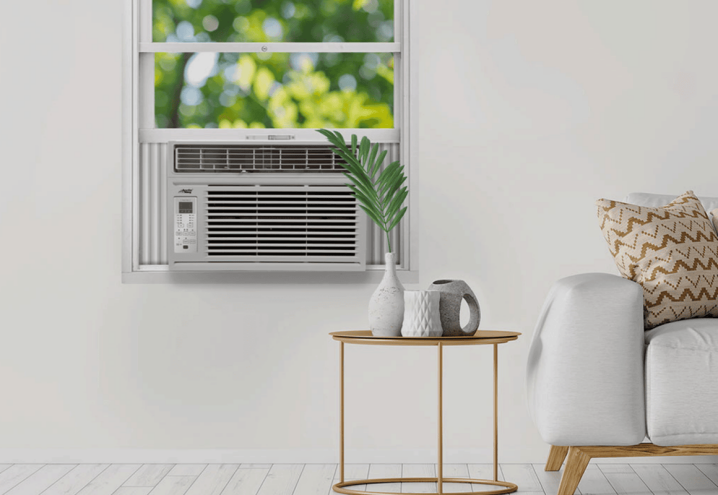
A window air conditioner is a compact unit installed in a suitable window opening or wall aperture.
Unlike a split air conditioner, most conventional window units contain the compressor, evaporator, condenser, and fans in one housing.
How it works
The unit draws warm air from inside the room, cools it across the evaporator coil, and returns the cooled air to the room.
At the same time, the outdoor-facing section releases the heat extracted from the indoor air.
How it conserves electricity
A properly sized window air conditioner can cool a small room without requiring a separate outdoor unit and refrigerant pipe installation.
Some modern models incorporate variable-speed compressors, electronic thermostats, and energy-saving operating modes.
Electricity consumption can be reduced by:
- Sealing gaps around the installation.
- Keeping filters clean.
- Selecting the correct cooling capacity.
- Using timers when the room is unoccupied.
- Choosing a model with a strong energy-efficiency rating.
Best for: small bedrooms, compact offices, rented accommodation, and buildings where a split system is impractical.
Important: Installation quality matters. Poor sealing around the unit can allow warm air to enter and make cooling less efficient that is why you need to hire the services of Yehans International for premium-quality installation.
2.3. Portable Air Conditioner
A portable air conditioner is a movable cooling unit designed to serve a room without permanent installation of a conventional split system.
Most models use an exhaust hose to discharge hot air through a window or another suitable opening.
How it works
The unit draws warm room air across an evaporator coil to cool it. Heat collected by the refrigeration system is then discharged outside through the exhaust hose.
Depending on the design, moisture is collected in a tank, drained away, or managed by an internal evaporation system.
How it conserves electricity
Portable units can help users avoid cooling an entire building when only one room requires cooling.
However, they are not automatically more energy-efficient than split or window units. Their efficiency depends on the model, installation, exhaust arrangement, and room conditions.
To improve performance:
- Seal the window around the exhaust hose.
- Keep the hose as short and straight as practical.
- Clean the air filter regularly.
- Use the unit only in the room where cooling is needed.
- Select a model with a suitable efficiency rating.
Best for: Temporary accommodation, rented spaces, small offices, and locations where permanent installation is difficult.
2.4. Ceiling Cassette Air Conditioner
A ceiling cassette air conditioner is commonly installed in offices, conference rooms, restaurants, and commercial buildings.
The indoor unit sits within or against a suspended ceiling, leaving the visible panel relatively flush with the ceiling surface.
Many models distribute air in four directions, helping cool larger areas more evenly.
How it works
The system draws warm room air into the indoor unit, passes it over the evaporator coil, and distributes cooled air through its directional outlets.
Like a split air conditioner, it generally uses an outdoor unit to reject heat from the refrigeration system.
How it conserves electricity
Modern ceiling cassette models may incorporate inverter compressors and automatic airflow controls.
Their energy efficiency can improve when:
- The unit is correctly sized for the room.
- Air is distributed effectively.
- The filters and heat exchangers remain clean. Yehans International can have that checked for you..
- The thermostat is set to a reasonable temperature.
- Doors and windows are kept closed while cooling.
Some models allow different airflow patterns to suit room occupancy and layout.
Best for: Open-plan offices, meeting rooms, restaurants, retail spaces, and conference rooms.
Business advantage: A ceiling cassette can provide effective air distribution while keeping the walls relatively clear for furniture, shelves, and office equipment.
2.5. Ducted Central Air Conditioning
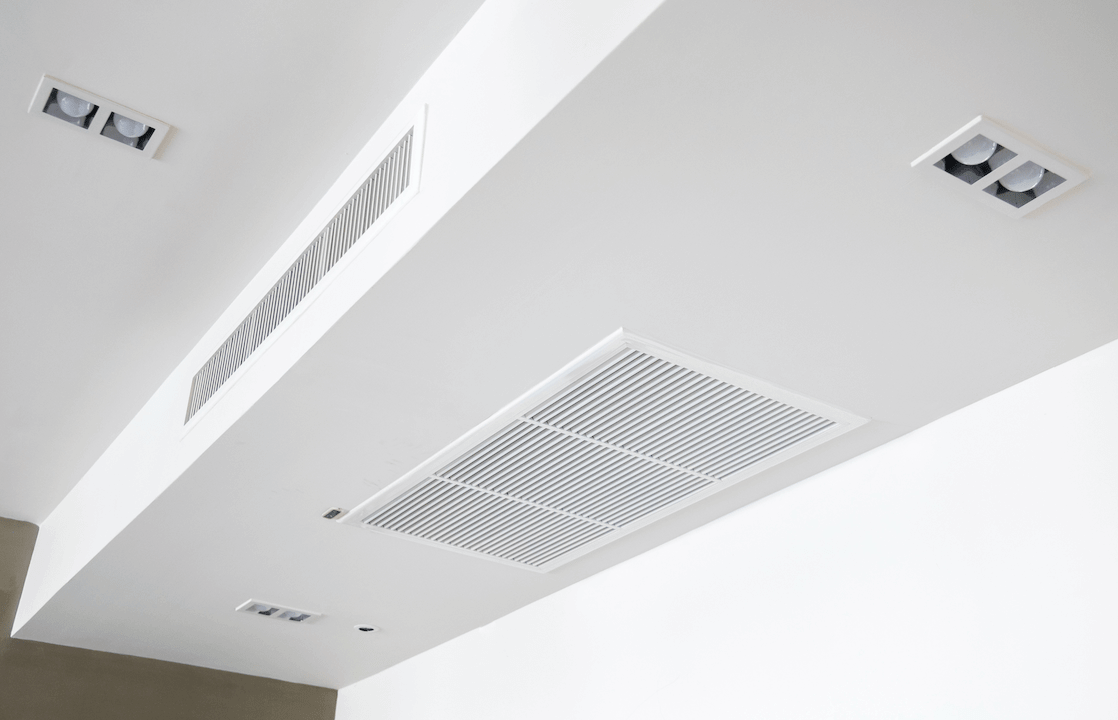
Ducted central air conditioning is designed to distribute conditioned air to multiple rooms or zones through a network of ducts.
The main equipment is typically concealed in a ceiling space, service area, or plant room, while supply grilles deliver air to the occupied spaces.
How it works
The system cools air using a refrigeration circuit and distributes the conditioned air through ducts.
Depending on the design, warm air may return through dedicated return ducts or other return-air arrangements before passing through the system again.
Central systems can be configured to serve several rooms, floors, or zones.
How it conserves electricity
A properly designed central system can deliver cooling efficiently across large buildings.
Energy-saving opportunities include:
- Zoning: Cool occupied areas without unnecessarily cooling unused spaces.
- Inverter technology: Yehans International can match compressor output to changing cooling demand.
- Efficient fans: Reduce the electricity needed to move air.
- Insulated ducts: Reduce unwanted heat gain or loss.
- Programmable controls: Adjust temperatures according to occupancy and working hours.
- Preventive maintenance: Keep coils, filters, fans, and drainage systems in good condition.
Duct leakage, poor insulation, excessive fan pressure, and badly designed zoning can significantly increase electricity consumption. Call Yehans International to have all these problems fixed, which will hence save you some money on electricity bills.
Best for: large homes, hotels, office buildings, conference facilities, and commercial properties with several rooms requiring coordinated cooling.
Important: Central air conditioning is not automatically the most energy-efficient choice for every building. Proper design, zoning, and installation are essential.
2.6. Floor-Standing Air Conditioner

A floor-standing air conditioner is designed to sit on the floor or near the base of a wall.
These units are available in several configurations, including systems with separate outdoor units. Some models are designed to deliver strong airflow in relatively large spaces.
How it works
The unit draws in warm air, cools it through a refrigeration system, and returns cooled air to the room.
The exact arrangement of the indoor and outdoor components depends on the model.
How it conserves electricity
Inverter floor-standing models can adjust cooling output to match the heat load of the room.
Their efficiency can also be improved by:
- Installing the unit away from obstructions.
- Keeping air intakes and outlets clear.
- Cleaning filters regularly.
- Selecting the correct capacity.
- Using timers and energy-saving modes.
- Maintaining the refrigeration system according to the manufacturer's instructions.
Best for: Large offices, showrooms, reception areas, halls, and spaces where wall-mounted units may not provide the required airflow.
Business advantage: Floor-standing systems can provide substantial cooling capacity without requiring a ceiling-mounted indoor unit.
Compare Energy Efficiency Ratings
When comparing models, consider the efficiency rating shown on the product label and the manufacturer's technical specifications.
A higher efficiency rating generally indicates that the air conditioner can provide more cooling for a given amount of electricity under the relevant test conditions.
Consider Your Operating Costs
An air conditioner's purchase price is only one part of its total cost.
Yehans International Gh. Ltd. provides information on:
- Estimated electricity consumption.
- How many hours the unit will operate daily.
- Maintenance requirements.
- Expected service life.
- Availability of spare parts.
- Installation costs.
- Warranty coverage.
A model with a higher purchase price may offer better long-term value if its energy consumption is sufficiently lower and it meets your cooling requirements.
Choose a Reliable Installer (Yehans International Ghana Ltd.)
Even an efficient air conditioner can perform poorly if it is incorrectly installed.
Our installers at Yehans International Gh. Ltd. ensure that:
- The unit has sufficient cooling capacity.
- The indoor unit is positioned for effective air distribution.
- The outdoor unit has adequate airflow.
- Refrigerant piping is correctly installed.
- Electrical connections meet applicable safety requirements.
- Condensate drains work properly.
- The system is tested before handover.
Our installation services help the Air conditioner operate as intended and can reduce the likelihood of avoidable breakdowns, saving the customer time and money.
Practical Ways to Reduce Air Conditioning Electricity Bills
Whether you have a single air conditioner at home or several units in an office, the following measures can help control electricity consumption.
|
Energy-saving measure |
How it helps |
|
Use an inverter model |
Adjusts compressor output to match cooling demand. |
|
Set a moderate temperature |
Avoids unnecessary cooling and excessive energy use. |
|
Close doors and windows |
Reduces the entry of warm, humid air. |
|
Clean air filters |
Maintains good airflow through the system. |
|
Use timers |
Prevents cooling when rooms are unoccupied. |
|
Improve insulation |
Reduces the amount of heat entering the building. |
|
Use curtains or blinds |
Limits heat gain from direct sunlight. |
|
Maintain outdoor units |
Helps heat transfer take place effectively. |
|
Select the right capacity |
Avoids the problems associated with undersized or oversized units. |
|
Use ceiling fans where appropriate |
Helps distribute cooled air and may allow a higher thermostat setting. |
|
Schedule office cooling |
Matches operating hours to building occupancy. |
|
Investigate unusual energy use |
Helps identify equipment faults or inefficient operating practices. |
Which Air Conditioner Is Best for Your Home or Office?
The best choice depends on the size of the building, the number of rooms, the budget, and how the space will be used.
|
Type |
Most suitable application |
Energy-efficiency considerations |
|
Wall-mounted split inverter |
Bedrooms, living rooms, small offices |
Offers individual room control and variable-speed operation. |
|
Window air conditioner |
Small rooms and compact offices |
Can be practical when properly sized and sealed. |
|
Portable air conditioner |
Temporary or rented spaces |
Convenient, but many models are less efficient than comparable window or split systems. |
|
Ceiling cassette |
Open-plan offices and meeting rooms |
Provides broad air distribution when correctly designed. |
|
Ducted central system |
Large homes, hotels, and commercial buildings |
Can be efficient with effective zoning, insulated ducts, and suitable controls. |
|
Floor-standing air conditioner |
Large offices, halls, and showrooms |
Suitable for spaces requiring substantial airflow; inverter options may improve efficiency. |
My recommendation: For many individual rooms in Ghanaian homes and small offices, a correctly sized inverter split air conditioner is the right starting point. For larger commercial buildings, a professional assessment by Yehans International Gh. Ltd. can determine whether ceiling cassette, ducted, or another commercial system offers the best combination of comfort and operating cost.
Conclusion: Enjoy Better Comfort While Saving Electricity
Air conditioning offers important benefits for homes and offices, including improved thermal comfort, better sleeping conditions, humidity control, and a more pleasant working environment.
Different systems serve different needs. Wall-mounted split units are practical for individual rooms; window and portable units can suit smaller spaces; ceiling cassette systems are useful in commercial settings, and ducted systems can provide coordinated cooling across larger buildings.
However, the most effective air conditioning system is not necessarily the biggest or most expensive one. It is the system that provides the required cooling efficiently, reliably, and at a reasonable operating cost.
Yehans International will guide you in choosing the correct capacity, considering inverter technology, maintaining the equipment, sealing rooms properly, and using temperature controls wisely.
Homeowners, businesses, and schools can enjoy the benefits of air conditioning while managing electricity bills with Yehans International as your best air conditioning installer.
Stay cool, improve your comfort, and make energy efficiency a priority when choosing your next air conditioner.
For enquiries and purchases, visit www.yehansinternational.com or our showroom at 75 Boundary Road, East Legon, American House, or contact 024 431 9079,054 434 2319, or 054 434 0680.